

The Flyways Birds Use to Migrate Across Continents
May 13, 2026
Migration Basics | Navigation | Flyways | Evolution of Migration
Hundreds of millions of birds make long-distance migrations each year, often crossing continents and even oceans along their way. So it’s only natural that they take similar routes. These routes are called flyways—a term for any well-established route used by large numbers and multiple species of migratory birds each year.

In North America, migratory flyways occur along the Pacific and Atlantic coasts, as well as along the Mississippi River Valley and Great Plains, which provide a broad route up the center of the continent. Shorebirds and waterfowl are especially likely to use these flyways.
As an extension of the Atlantic Flyway, some birds make a marathon flight south across the Atlantic Ocean. They take off from the northeastern United States and fly nonstop until they reach northern South America. Species that use this route include American Golden Plover, Yellow-billed Cuckoo, and even the tiny Blackpoll Warbler. This route is especially popular in autumn, when prevailing winds are favorable.
Raptors Use Their Own Flyways


Raptors typically migrate during the day and spend a lot of time soaring. With their larger, heavier bodies and broad wings, constant flapping flight is not as efficient as it is for smaller birds. Instead, raptors search out thermals (rising columns of warm air), using them to gain altitude and then gliding until they reach the next thermal. Because of these flight requirements, they typically avoid migrating over water. And that’s why their migration flyways look so different from the routes taken by shorebirds and waterfowl.
Songbirds Don’t Really Use Flyways
In the 2010s, as technology that allowed better tracking of small birds became available, scientists discovered that most songbirds migrate in a different pattern from larger birds. Classic flyway species, like waterfowl, depend on a single main habitat. They migrate north and south in relatively narrow, well-defined flyways, a little like semi-trucks on an interstate.
Related Stories
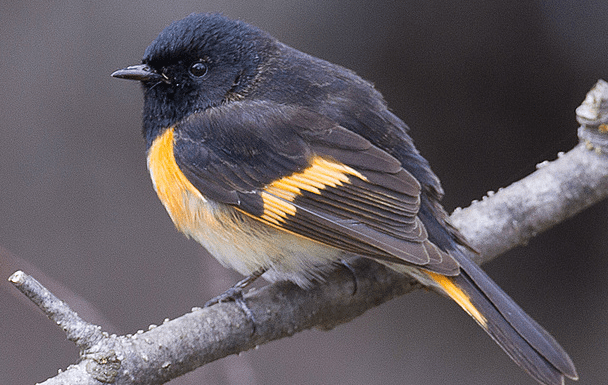
But songbirds are more like passenger cars touring back roads, fanning out in a broad front across wide stretches of forest or grassland. Songbirds also seek out favorable winds, so their migration routes are affected by climatological patterns. This is why many songbirds have “loop migrations,” with northward routes in spring that are considerably farther west than their southward journeys in autumn.
Flyways As Conservation Corridors
From a conservation perspective, the fact that birds concentrate along flyways means certain areas, including topographic concentration points and productive staging areas—can have outsize importance to the populations of many species. If habitat loss or degradation occurs, the harm to bird populations can be especially far-reaching.
But at the same time, flyways allow people to concentrate conservation efforts in geographic areas that can yield wide-ranging benefits. The Cornell Lab of Ornithology’s Coastal Solutions Fellows program seeks to protect shorebirds at a large scale by concentrating on conservation at points along the coastal flyways of North and South America.
Since birds concentrate along flyways, they can become corridors for the dispersal of diseases. An example comes from the early 2020s, when a virulent strain of avian influenza from Eurasia appeared in North America. As birds flew along flyways during their fall migration, the virus spread to South America—indicating that flyways are an important consideration for scientists concerned with animal diseases.
The concentrating effect of flyways can also create spectacular birding opportunities. Quirks in the shape of coastlines such as peninsulas and isthmuses can produce massive flocks of raptors and can cause other species like songbirds and shorebirds to pause their journeys. Examples include Cape May, New Jersey; Point Reyes, California; the Florida Keys; Eilat, Israel; and Veracruz, Mexico.
More Migration Stories








All About Birds
is a free resource
Available for everyone,
funded by donors like you
American Kestrel by Blair Dudeck / Macaulay Library