
In Australia, Fairywrens Are Adding Plastic to Their Mating Displays
June 22, 2026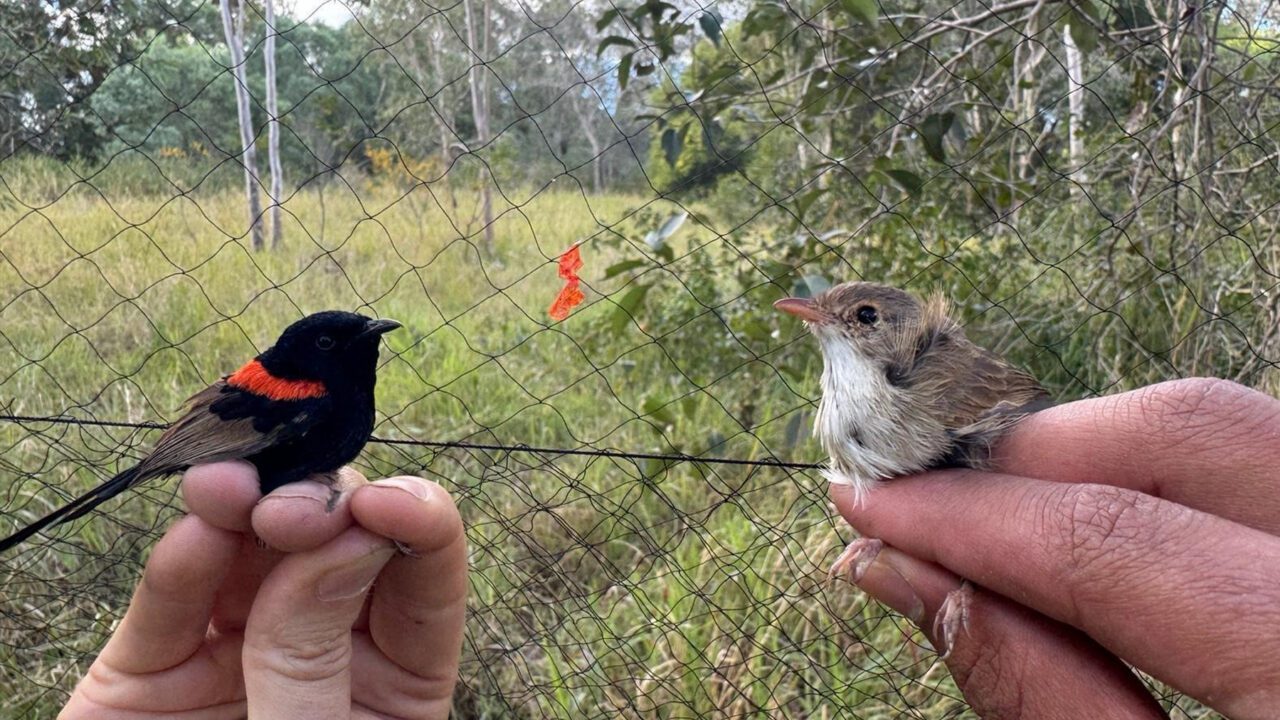
From the Summer 2026 issue of Living Bird magazine. Subscribe now.


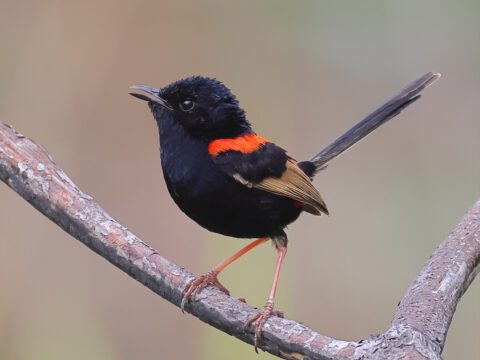
Last summer, Cornell University undergraduate Jaden Salett ’27 walked, net in hand, through the grasslands of Lake Samsonvale in Queensland, Australia. Tropical shrubs filled the landscape with rainbow blooms, and tiny, long-tailed birds called fairywrens fluttered around him. It was a typical day of catching and tagging fairywrens as part of a long-term study of their social and mating behavior, until a flash of black and orange shot into his net.
An ornamented male Red-backed Fairywren had darted toward a female caught moments earlier. When Salett and his fellow researchers retrieved the bird, they noticed a bright orange object clutched in its beak. It turned out to be a fragment of flagging tape—the brightly colored plastic strips that scientists use to mark nest locations during field studies.
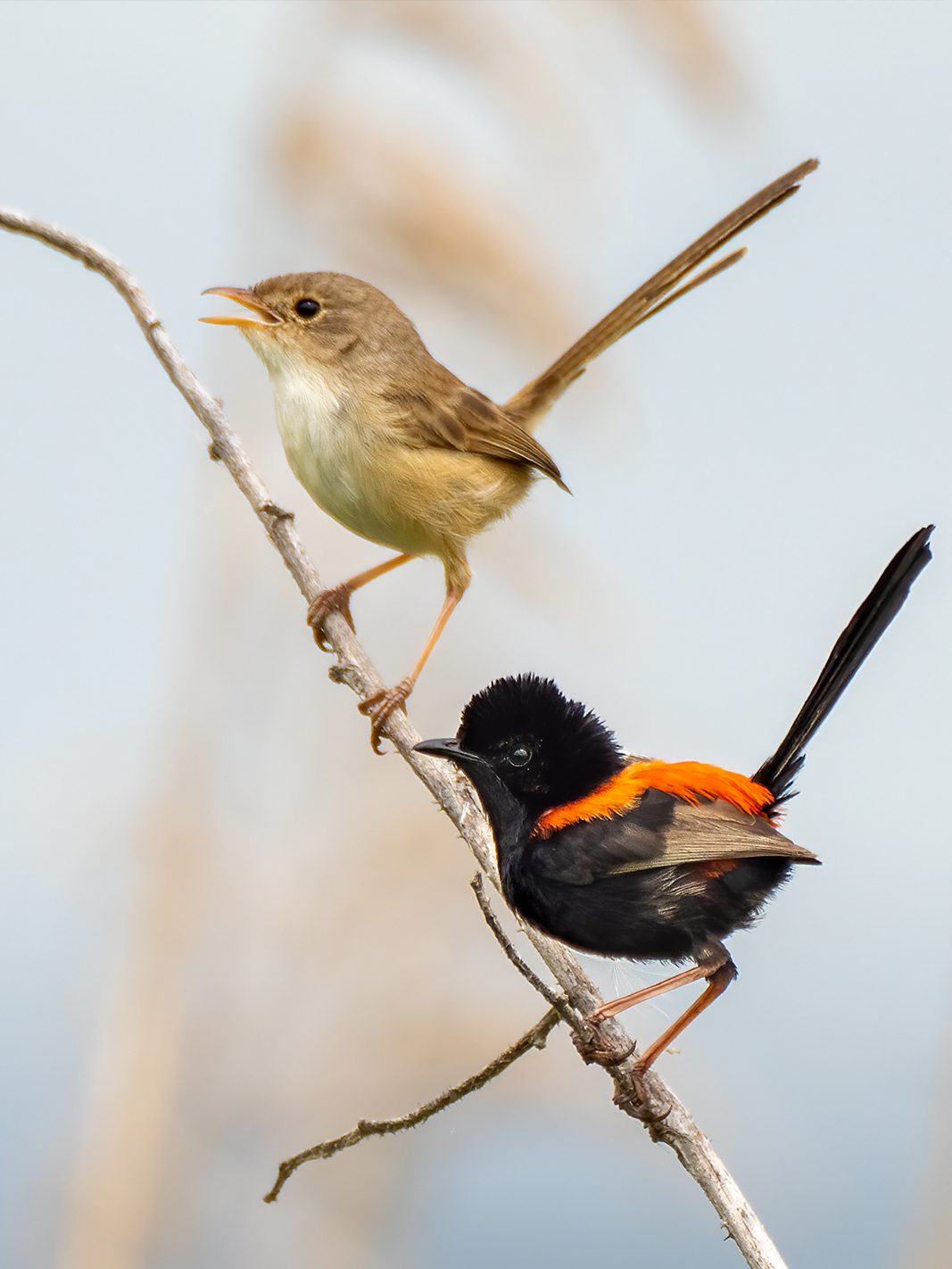
Red-backed and other fairywren males are known to attract females by carrying colorful objects, typically flower petals or berries gathered from nearby plants. Seeing one use plastic instead came as a shock.
“My immediate thought was, ‘Oh, wow!’” Salett says. “Not a lot of species use an additional piece of material for display. It was quite uncommon to see a bird using anthropogenic material.”
Salett’s unusual observation was published in a research article in the 2026 edition of the Journal of Australian Field Ornithology. The article describes the first recorded instances of fairywrens using human-made materials in courtship displays. Salett later learned of a similar observation by Cornell Lab of Ornithology postdoctoral fellow James Kennerley in Western Australia, where a White-winged Fairywren carried a piece of white plastic—likely from a plastic bag—during a mating display.
Jordan Boersma—a Cornell Lab researcher who has studied fairywrens for more than 15 years, and is Salett’s research advisor—says the behavior could be the start of a broader shift, as birds begin to recognize and use human-made materials in their environment.
“It probably behooves these fairywrens to use flagging tape,” he says. “If the size of the object matters—which we don’t know—I would imagine that the larger the object, the more enticing it might be to a potential mate.”
“This could be a rare case,” he adds, “of birds finding a benefit from our waste.”

All About Birds
is a free resource
Available for everyone,
funded by donors like you
American Kestrel by Blair Dudeck / Macaulay Library