

The Four Keys to ID
- Size & Shape
Fox Sparrows are large, round-bodied sparrows with stout bills and medium-length tails.
Relative Size
Smaller than a Spotted Towhee; larger than a Dark-eyed Junco.
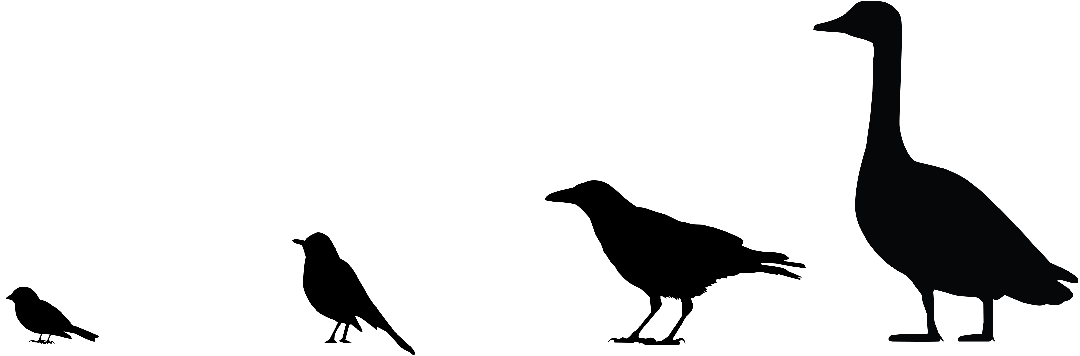
 sparrow-sized or smaller
Measurements
- Both Sexes
- Length: 5.9-7.5 in (15-19 cm)
- Weight: 0.9-1.6 oz (26-44 g)
- Wingspan: 10.5-11.4 in (26.7-29 cm)
© Dave Beeke / Macaulay Library
- Color Pattern
- Behavior
- Habitat
Regional Differences
Fox Sparrows vary greatly across their range. “Red” Fox Sparrows, widely distributed across the boreal forest of northern North America, are rusty above with some pale gray on the head and rufous splotches on the underparts. The “Slate-colored” Fox Sparrow of the mountains of the Interior West is small-billed and dull gray above with brownish splotches below. The range-restricted “Thick-billed” Fox Sparrow of California’s Sierra Nevada mountains looks like a “Slate-colored” Fox Sparrow but has a very large, chunky bill. “Sooty” Fox Sparrows along the Pacific Coast are very dark brown above.


