
Similar Species
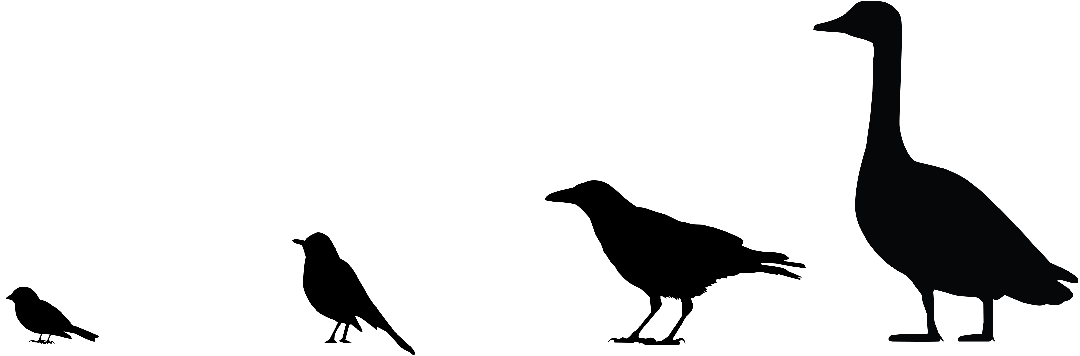
Neotropic Cormorants occur alongside Double-crested Cormorants in an expanding area of the southern United States. The Neotropic is smaller with a longer tail, and the area in front of the eye is covered by feathers instead of bare facial skin. Brandt’s Cormorants and Pelagic Cormorants overlap with Double-crested only along the Pacific Coast. Brandt’s Cormorants are slightly larger with a shorter tail; adults have bright bluish facial skin. Pelagic Cormorants are smaller, with very thin necks and a tiny head; breeding adults show large white hip patches. The Great Cormorant overlaps with Double-crested on the northern Atlantic Coast. It is somewhat larger and thicker overall; breeding adults have prominent white flank patches and a less-obvious white patch around the bill. Juvenile Great Cormorants have a white belly instead of the pale brown of Double-crested. The Anhinga of the southeastern United States is more slender with a longer, straighter bill and longer tail. In flight at a distance, Canada Geese look much like Double-crested Cormorants, but their flocks don’t change shape as much, and geese never stop flapping in direct flight.
Regional Differences
Double-crested Cormorants in Alaska are larger with whiter, straighter crests than individuals in the rest of North America. Heading southeast through their range, they are smaller with less obvious, curly black head crests. The smallest individuals are in the Bahamas.
Find This Bird
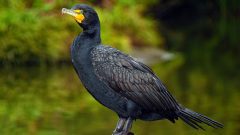
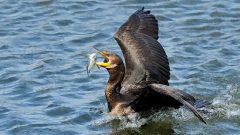
Look near lakes and coastlines for perched black waterbirds, smaller and with shorter legs than a heron, and a distinctive S-shaped crook in their neck. On the water they sit low, with the head and bill usually tilted slightly upward. You may also see them holding their wings spread-eagled and sunning themselves. Flocks of cormorants fly in irregularly shaped lines or sloppy V’s. In flight, cormorants hold their head up, neck slightly bent, belly hanging low, and their wing beats are slow and labored.