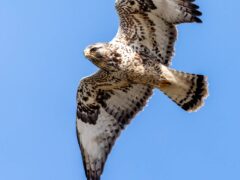

Similar Species
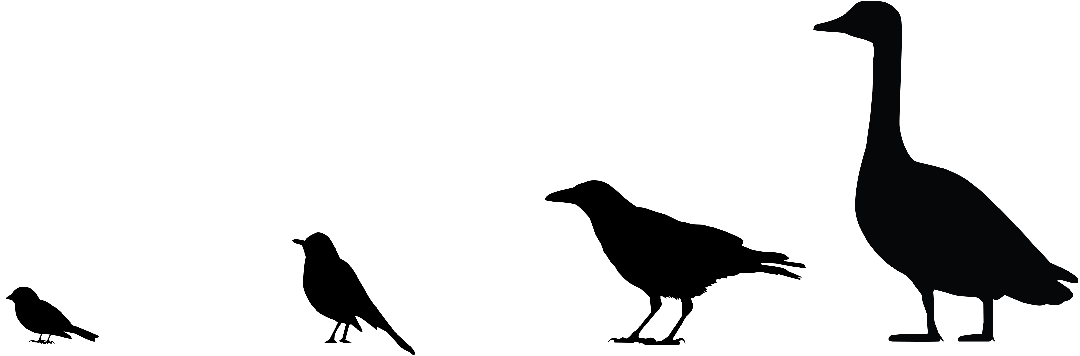
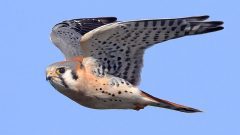
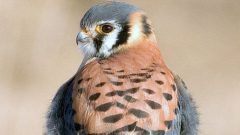
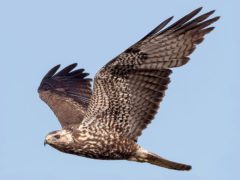
Merlin is a slightly larger, stockier, darker brown version of the American Kestrel—similar in size but quite different in flight style and attitude. Merlins target larger prey, particularly shorebirds and other small to medium-sized birds, which they often chase on the wing. American Kestrels leave such large prey alone. Merlins have a snappier flight style, and looks like a powerhouse with strong, near-constant wingbeats. Sharp-shinned Hawk is roughly kestrel-sized, but it's an accipiter—it has broader wings, a longer tail, and is thicker through the chest. Sharp-shinned Hawks have heavier markings below and are not as warm red-brown on the back; they also hunt in more heavily wooded areas than kestrels. One species frequently confused with kestrels isn't even a raptor. Mourning Doves occupy the same habitats as kestrels and often sit on telephone wires. They have much smaller heads than kestrels and their tails are slender and pointed. In flight, Mourning Doves tend to fly fast and in straight lines, with nearly continuous wingbeats.
Backyard Tips
American Kestrels take well to artificial nest boxes. To attract a breeding pair, the box should be put up by early February. Nail it to a tree 10 to 30 feet above the ground away from traffic and loud human activity. Attach a guard to keep predators from raiding eggs and young. Find out more about nest boxes on our Attract Birds pages. You'll find plans for building a nest box of the appropriate size at our NestWatch site.
Find This Bird
Scan fence posts, utility lines and telephone poles, particularly when driving through farmland. Or catch them by the hundreds at coastal migration sites—such as Cape May, New Jersey, or Kiptopeke, Virginia—in September or early October. Particularly in summer, listen for their shrill killy-killy-killy call to be alerted to when they're around.