
• Skip to Content
  • Skip to Main Navigation
  • Skip to Local Navigation
  • Skip to Search
  • Skip to Sitemap
  • Skip to Footer
Help develop a Bird ID tool!

Sharp-shinned Hawk

Accipiter striatus ORDER: ACCIPITRIFORMES FAMILY: ACCIPITRIDAE

IUCN Conservation Status: Least Concern

  • Similar Species
  • Related Species
  • Go to:

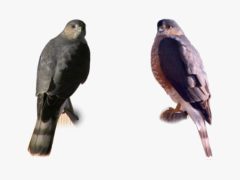
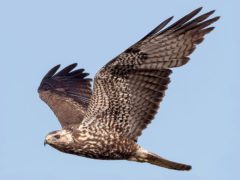
A tiny hawk that appears in a blur of motion—and often disappears in a flurry of feathers. That’s the Sharp-shinned Hawk, the smallest hawk in North America and a daring, acrobatic flier. These raptors have distinctive proportions: long legs, short wings, and very long tails, which they use for navigating their deep-woods homes at top speed in pursuit of songbirds and mice. They’re easiest to spot in fall on their southward migration, or occasionally at winter feeders.

Get BNA: the definitive resource for North American birds
Donate to Bird Cams

Sorry No Videos for this Species... be sure to check back!

Backyard Tips

Backyard bird feeders do attract Sharp-shinned Hawks from time to time. Most bird watchers prefer to discourage this behavior, although studies indicate that feeders don’t greatly increase a bird’s chances of being taken by a Sharp-shinned Hawk—the hawks get the great majority of their diet elsewhere. If a hawk starts hunting regularly in your yard, the best thing to do is to take down your feeders for a couple of weeks. The hawk will move on and the songbirds will return when you put your feeders back up. Here’s more about how to cope with predators and pests in your yard.

Find This Bird

Look for these secretive hawks as they move across open areas with their characteristic flap-and-glide flight pattern. You’re most likely to spot Sharp-shinned Hawks during migration, especially fall migration, when they’re the most plentiful raptors seen at hawkwatch sites. Incredibly elusive while nesting, most Sharp-shinned Hawks spend their summers under the canopy of dense forests, occasionally coming into the open to circle in the sky or fly across a field. But they do also visit rural or suburban areas with some tree cover, especially where bird feeders or spilled grain encourage congregation of small birds.

Get BNA: the definitive resource for North American birds