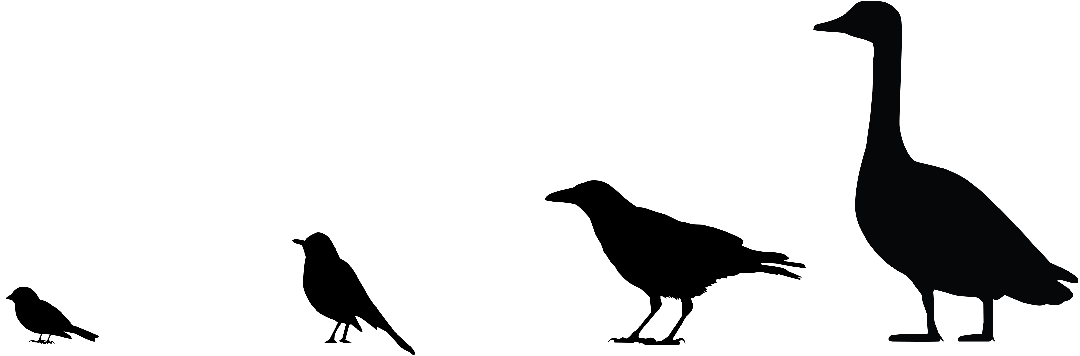

Similar Species
The American Black Duck of eastern North America looks like a female Mallard but has a darker body, greenish-yellow bill, and a purplish “speculum” patch in the wings that does not have white borders. Identification is complicated by the frequent occurrence of hybrids between the two species. The Mottled Duck of the coastal Southeast also resembles a female Mallard, but is somewhat darker, with less black on the bill (just a small black spot at the base), and lacks the broad white borders to the speculum. Female Gadwalls have a slimmer bill with a thin orange line along the edge and often show a white patch on the folded wing. Northern Shovelers have a bill that is noticeably larger and wider than any other duck’s. Its body pattern is different from a Mallard’s, too: the belly and sides are chestnut, set off by a white breast and undertail. Female Northern Shovelers, in addition to their very large bill, are paler overall, with lots of buffy and tan tones to the body. The green heads of Red-breasted Mergansers and Common Mergansers superficially resemble a male Mallard’s, but these birds’ shape and behavior are much different: mergansers are streamlined ducks with slender bills, and they dive instead of dabble.
Regional Differences
A subspecies of the Mallard called the “Mexican Duck,” Anas platyrhynchos diazi, occurs in parts of Arizona, New Mexico, Texas, and Mexico. Both males and females closely resemble female Mallards, although the body color is somewhat darker than a typical female Mallard. Mexican Ducks were once thought to be a full species, but they hybridize extensively with typical Mallards in the northern parts of their range.
Backyard Tips
If you have a pond or marshy area on your property Mallards might be attracted to your backyard. Occasionally, Mallards have been known to show up in people’s swimming pools.
Find This Bird
Look for Mallards at local city or suburban parks, where they’re likely to be accepting food handouts from humans. If you want to see them in a more natural setting, visit a nearby pond or lake—Mallards are likely to be the ducks you most frequently see.
Get Involved
You can help scientists learn more about this species by participating in the Celebrate Urban Birds project.