

The Four Keys to ID
- Size & Shape
The Eastern Screech-Owl is a short, stocky bird, with a large head and almost no neck. Its wings are rounded; its tail is short and square. Pointed ear tufts are often raised, lending its head a distinctive silhouette.
Relative Size
A small owl, slightly larger and considerably bulkier than a European Starling.
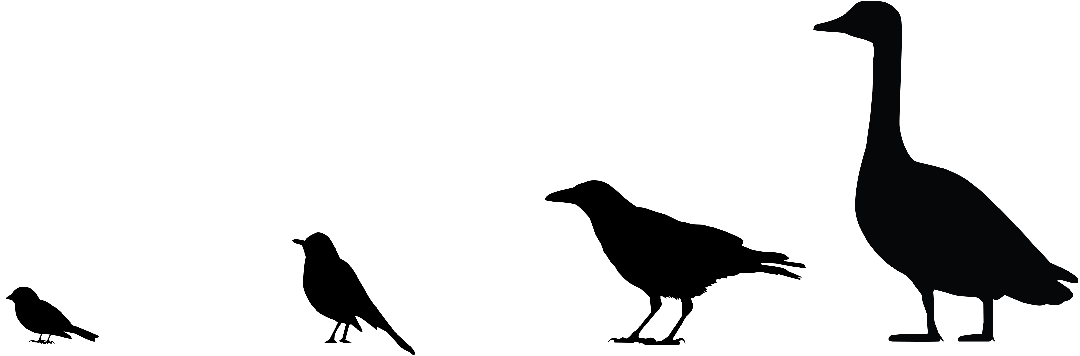
 robin-sized
Measurements
- Both Sexes
- Length: 6.3-9.8 in (16-25 cm)
- Weight: 4.3-8.6 oz (121-244 g)
- Wingspan: 18.9-24.0 in (48-61 cm)
© David Wade / Macaulay Library
- Color Pattern
- Behavior
- Habitat
Regional Differences
The “McCall’s” Eastern Screech-Owl (Asio otus mccallii), inhabits south-central Texas and parts of northern Mexico. It may prove to be a separate species, as it is always gray and never gives the “whinny” call. The two common color morphs, gray and rufous, represent individual variation and don’t vary consistently by region or subspecies.


