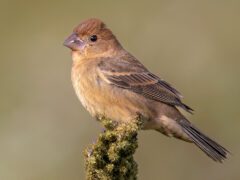

The Four Keys to ID
- Size & Shape
The Dark-eyed Junco is a medium-sized sparrow with a rounded head, a short, stout bill and a fairly long, conspicuous tail.
Relative Size
Slightly larger than a Chipping Sparrow.
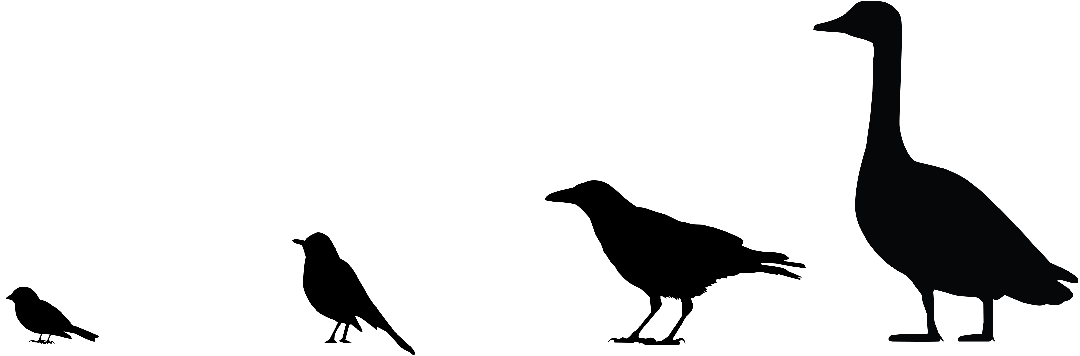
 sparrow-sized or smaller
Measurements
- Both Sexes
- Length: 5.5-6.3 in (14-16 cm)
- Weight: 0.6-1.1 oz (18-30 g)
- Wingspan: 7.1-9.8 in (18-25 cm)
© Chris Wood / Macaulay Library
- Color Pattern
- Behavior
- Habitat
Regional Differences
There is a huge range of geographic variation in the Dark-eyed Junco. Among the 15 described races, six forms are easily recognizable in the field and five used to be considered separate species until the 1980s. A field guide is the best place to look for complete illustration of ranges and plumages, but in general there are two widespread forms of the Dark-eyed Junco: “slate-colored” junco of the eastern United States and most of Canada, which is smooth gray above; and “Oregon” junco, found across much of the western U.S., with a dark hood, warm brown back and rufous flanks. Other more restricted variations include the slate-colored-like “white-winged” and Oregon-like “pink-sided” juncos of the Rockies and western Great Plains; and the Yellow-eyed Junco-like “red-backed” and “gray-headed” juncos of the Southwest.