
Backyard Tips
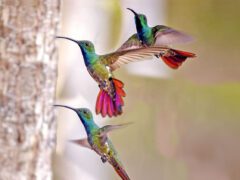
It’s fairly easy to attract Black-chinned Hummingbirds to feeding stations. Make sugar water mixtures with about one-quarter cup of sugar per cup of water. Food coloring is unnecessary; table sugar is the best choice. Change the water before it grows cloudy or discolored and remember that during hot weather, sugar water ferments rapidly to produce toxic alcohol. During hot spells, change your hummingbird water daily or at most every two days. Your feeders will attract far more hummingbirds if you also grow appropriate flowers attractive to them.
Find This Bird
When birding in its range, listen for the distinctive humming wings and check out tiny bare branches at the tops of dead or live trees, where these birds often sit between feeding bouts. Black-chinned Hummingbirds can be very tricky to follow as they dart and weave among flowering shrubs and insect swarms, but after a feeding bout they very often return to a favorite perch.
Get Involved
Keep track of the Black-chinned Hummingbirds at your feeder with Project FeederWatch.
Look for Black-chinned Hummingbird nests and contribute valuable data about them through NestWatch.
Report your Black-chinned Hummingbird sightings to eBird.
Are you watching Black-chinned Hummingbirds in a city? Celebrate Urban Birds!
For recommendations about plants that attract Black-chinned Hummingbirds in desert habitats.
Southeastern Arizona Bird Observatory conducts research and provides authoritative information about Southwestern hummingbirds.
The Nature Conservancy protects many areas that provide habitat for Black-chinned Hummingbirds. Perhaps the most popular is Ramsey Canyon in Southeastern Arizona.
The Wichita Mountains Wildlife Refuge in Oklahoma is an easy place to see Black-chinned Hummingbirds. Find out more.