

Feeding Birds: a Quick Guide to Seed Types
April 20, 2009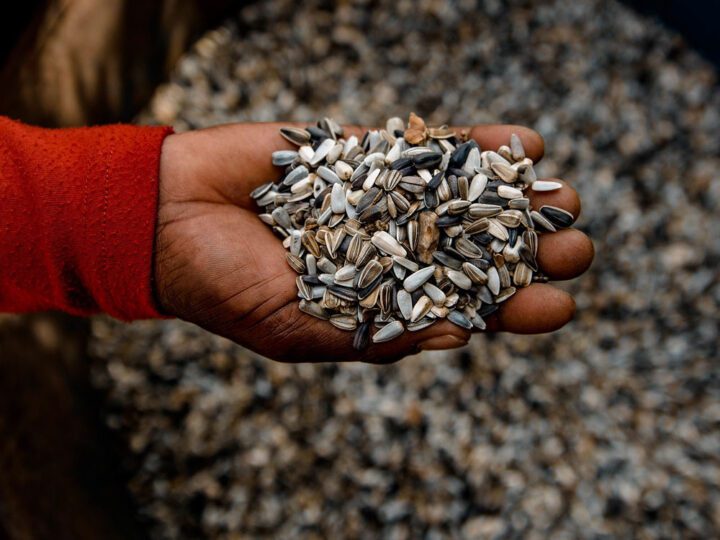
The seed that attracts the widest variety of birds, and so the mainstay for most backyard bird feeders, is sunflower. Other varieties of seed can help attract different types of birds to round out your backyard visitors. In general, mixtures that contain red millet, oats, and other “fillers” are not attractive to most birds and can lead to a lot of waste as the birds sort through the mix.
Here’s our quick guide to seed types, including:
- Sunflower
- Safflower
- Nyjer or thistle
- White proso millet
- Shelled and cracked corn
- Peanuts
- Milo or sorghum
- Golden millet, red millet, flax, and others
- Rapeseed and canary seed
Sunflower
There are two kinds of sunflower—black oil and striped. The black oil seeds (“oilers”) have very thin shells, easy for virtually all seed-eating birds to crack open, and the kernels within have a high fat content, extremely valuable for most winter birds. Striped sunflower seeds have a thicker shell, much harder for House Sparrows and blackbirds to crack open. So if you’re inundated with species you’d rather not subsidize at your black oil sunflower, before you do anything else, try switching to striped sunflower.
People living in apartments or who have trouble raking up seed shells under their feeders often offer shelled sunflower. Many birds love this, as of course do squirrels, and it’s expensive. Without the protection of the shell, sunflower hearts and chips quickly spoil, and can harbor dangerous bacteria, so it’s important to offer no more than can be eaten in a day or two.
Sunflower is very attractive to squirrels, a problem for people who don’t wish to subsidize them. Some kinds of squirrel baffles, and some specialized feeders, are fairly good at excluding them. Sunflower in the shell can be offered in a wide variety of feeders, including trays, tube feeders, hoppers, and acrylic window feeders. Sunflower hearts and chips shouldn’t be offered in tube feeders where moisture can collect.
Related Stories
Safflower
Safflower has a thick shell, hard for some birds to crack open, but is a favorite among cardinals. Some grosbeaks, chickadees, doves, and native sparrows also eat it. According to some sources, House Sparrows, European Starlings, and squirrels don’t like safflower, but in some areas seem to have developed a taste for it.
Cardinals and grosbeaks tend to prefer tray and hopper feeders, which makes these feeders a good choice for offering safflower.
Nyjer or thistle
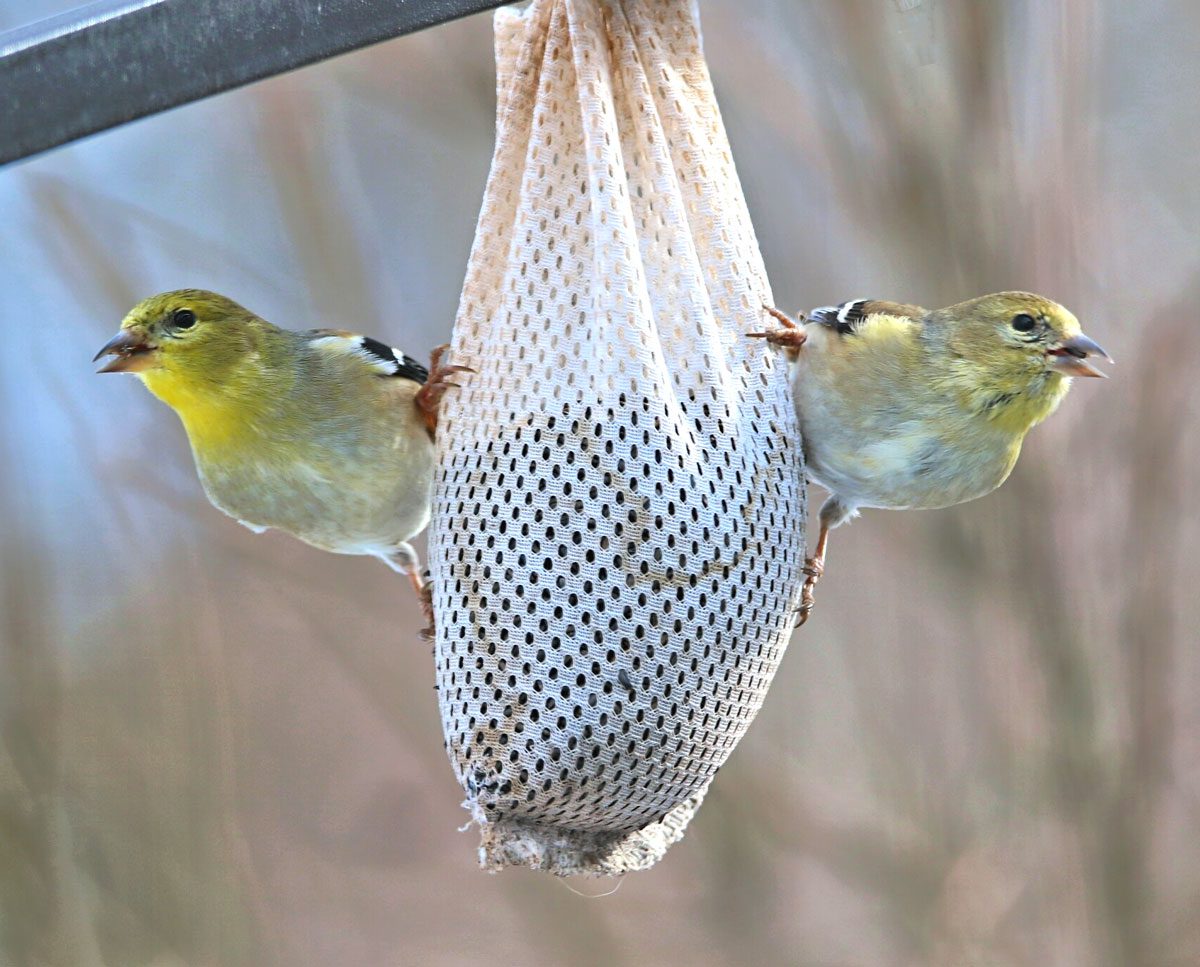
Small finches including American Goldfinches, Lesser Goldfinches, Indigo Buntings, Pine Siskins, and Common Redpolls often devour these tiny, black, needle-like seeds. As invasive thistle plants became a recognized problem in North America, suppliers shifted to a daisy-like plant, known as Guizotia abyssinica, that produces a similar type of small, oily, rich seed. The plant is now known as niger or nyjer, and is imported from overseas. The seeds are heat-sterilized during importation to limit their chance of spreading while retaining their food value.
White proso millet
White millet is a favorite with ground-feeding birds including quails, native American sparrows, doves, towhees, juncos, and cardinals. Unfortunately it’s also a favorite with cowbirds and other blackbirds and House Sparrows, which are already subsidized by human activities and supported at unnaturally high population levels by current agricultural practices and habitat changes. When these species are present, it’s wisest to not use millet; virtually all the birds that like it are equally attracted to black oil sunflower.
Because white millet is so preferred by ground-feeding birds, it’s often scattered on the ground—an excellent practice as long as no more is set out than birds can eat in a day. Low-set tray feeders with excellent drainage can be a very good choice for white millet, too.
Shelled and cracked corn
Corn is eaten by grouse, pheasants, turkeys, quails, cardinals, grosbeaks, crows, ravens, jays, doves, ducks, cranes, and other species. Unfortunately, corn has two serious problems. First, it’s a favorite of House Sparrows, cowbirds, starlings, geese, bears, raccoons, and deer—none of which should be subsidized by us. Second, corn is the bird food most likely to be contaminated with aflatoxins, which are extremely toxic even at low levels. Never buy corn in plastic bags, never allow it to get wet, never offer it in amounts that can’t be consumed in a day during rainy or very humid weather, and be conscientious about raking up old corn.
Check Out Project FeederWatch For More Resources

Never offer corn covered in a red dye. Corn intended for planting is often treated with fungicides, marked with red dye as a warning. It is highly toxic to humans, livestock, and all birds.
Never offer buttered popcorn or any kind of microwave popcorn. Popped corn spoils quickly.
Corn should be offered in fairly small amounts at a time on tray feeders. Don’t offer it in tube feeders that could harbor moisture.
Peanuts
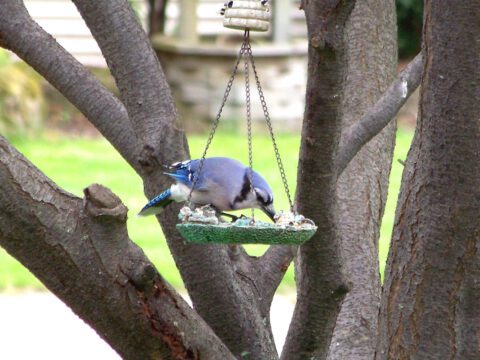
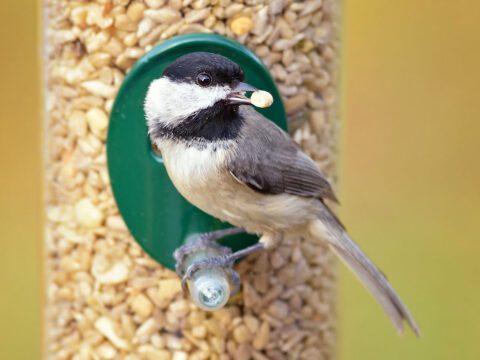
Peanuts are very popular with jays, crows, chickadees, titmice, woodpeckers, and many other species, but are also favored by squirrels, bears, raccoons, and other animals that should not be subsidized. Like corn, peanuts have a high likelihood of harboring aflatoxins, so must be kept dry and used up fairly quickly.
Peanuts in the shell can be set out on platform feeders or right on a deck railing or window feeder as a special treat for jays, if they reach them before the squirrels do. If peanuts or mixtures of peanuts and other seeds are offered in tube feeders, make sure to change the seed frequently, especially during rainy or humid weather, completely emptying out and cleaning the tube every time.
Milo or sorghum
Milo is a favorite with many Western ground-feeding birds. On Cornell Lab of Ornithology seed preference tests, Steller’s Jays, Curve-billed Thrashers, and Gambel’s Quails preferred milo to sunflower. In another study, House Sparrows did not eat milo, but cowbirds did.
Milo should be scattered on the ground or on low tray feeders. Stop offering it if you’re subsidizing cowbirds.
Related Stories

Golden millet, red millet, flax, and others
These seeds are often used as fillers in packaged birdseed mixes, but most birds shun them. Waste seed becomes a breeding ground for bacteria and fungus, contaminating fresh seed more quickly. Make sure to read the ingredients list on birdseed mixtures, avoiding those with these seeds. In particular, if a seed mix has a lot of small, red seeds, make sure they’re milo or sorghum, not red millet.
Rapeseed and canary seed
These two seed types don’t offer much over the more widespread seeds. A few birds do eat rapeseed, including quails, doves, finches, and juncos. If you’re not getting these, the rapeseed will be left to spoil. Canary seed is very popular with House Sparrows and cowbirds—birds that many people would prefer not to attract. Other species that eat canary seed are equally happy with sunflower, so this is a better all-around choice.

All About Birds
is a free resource
Available for everyone,
funded by donors like you
American Kestrel by Blair Dudeck / Macaulay Library