
• Skip to Content
  • Skip to Main Navigation
  • Skip to Local Navigation
  • Skip to Search
  • Skip to Sitemap
  • Skip to Footer
Help develop a Bird ID tool!

Savannah Sparrow

Passerculus sandwichensis ORDER: PASSERIFORMES FAMILY: EMBERIZIDAE

IUCN Conservation Status: Least Concern

  • Similar Species
  • Related Species
  • Go to:

Not all streaky brown birds are impossible to identify: Take a closer look at this one and you’ll see an understated but distinctive sparrow with a short tail, small head, and telltale yellow spot before the eye. Savannah Sparrows are one of the most numerous songbirds in North America, and while sometimes overlooked, are likely visitors across the continent. In summer, they don’t hesitate to advertise their location, belting out a loud, insect-like song from farm fields and grasslands.

Get BNA: the definitive resource for North American birds
Donate to Bird Cams

Keys to identification Help

Sparrows
Sparrows
Typical Voice
  • Size & Shape

    Savannah Sparrows are medium-sized sparrows with short, notched tails. The head appears small for the plump body, and the crown feathers often flare up to give the bird’s head a small peak. The thick-based, seed-eating bill is small for a sparrow.

  • Color Pattern

    Savannah Sparrows are brown above and white below, with crisp streaks throughout. Their upperparts are brown with black streaks, and the underparts are white with thin brown or black streaks on the breast and flanks. Look for a small yellow patch on the face in front of the eye.

  • Behavior

    Savannah Sparrows eat seeds on or near the ground, alone or in small flocks. When flushed, they usually fly up, flare their short tails, and circle around to land some yards away. In spring and summer, males sing their dry, insect-like melodies from exposed, low perches such as fenceposts. Also, listen for a thin, high-pitched tsss call.

  • Habitat

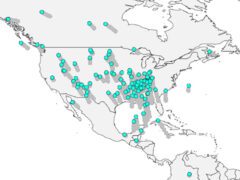
    Savannah Sparrows breed in open areas with low vegetation, including most of northern North America from tundra to grassland, marsh, and farmland. Even in winter, you’ll find Savannah Sparrows on the ground or in low vegetation in open areas; look for them along the edges of roads adjacent to farms.

Range Map Help

Savannah Sparrow Range Map
View dynamic map of eBird sightings

Field MarksHelp

  • Adult eastern form

    Savannah Sparrow

    Adult eastern form
    • © Kevin T. Karlson, Albany, New York, June 2000
  • Adult eastern form

    Savannah Sparrow

    Adult eastern form
    • © Kevin T. Karlson, Cape May, New Jersey, February 2000
  • Adult Belding

    Savannah Sparrow

    Adult Belding's form
    • © Marie Read, California
  • Adult large-billed form

    Savannah Sparrow

    Adult large-billed form
    • © Kevin T. Karlson, Salton Sea, California, November 2000

Similar Species

Song Sparrows live closer to dense cover than Savannah Sparrows; they are longer-tailed and darker with broad, blurry streaks on the flanks, and they lack yellow in front of the eye. Vesper Sparrows have pale eyerings and long tails with white outer margins that are obvious in flight. White-throated Sparrows rarely venture far from the woods; they are more boldly patterned than Savannah Sparrows with black-and-white striped heads and smoother gray underparts. American Pipits are not sparrows, and you can tell this from their longer, thinner bills. They are also larger and bob their tails while walking. Within their ranges, any of the longspur species can occur alongside Savannah Sparrows, but they tend to be in large, tight flocks and always give lots of sharp, chattering calls when flushed.

Regional Differences

The many subspecies of Savannah Sparrow can range from pale gray-brown to rusty overall. “Ipswich” Savannah Sparrows, which breed on islands in maritime Canada and winter along the East Coast, are large and pale gray-brown overall. “Belding’s” Savannah Sparrows from saltmarshes of Southern California and Mexico are very dark brown, almost blackish. The range-restricted “Large-billed” Savannah Sparrow of Mexico barely enters the United States in southern California; it has a much heavier bill than other forms of the species. All subspecies show thin, crisp streaking on the underparts and usually have yellow in front of the eye.

Backyard Tips

Savannah Sparrows are not feeder birds, though they may come to backyards that adjoin fields. But if you keep a brush pile on your property, you might see them swoop in and take cover during migration or over the winter.

Find This Bird

Savannah Sparrows are inconspicuous birds with high, thin voices—but they’re common and widespread. Look for them in grassy areas within their range, the thicker the better. Males are conspicuous during breeding season, singing from perches like a fencepost or a lone shrub or tree on a grassland.