
• Skip to Content
  • Skip to Main Navigation
  • Skip to Local Navigation
  • Skip to Search
  • Skip to Sitemap
  • Skip to Footer

Herring Gull

Larus argentatus ORDER: CHARADRIIFORMES FAMILY: LARIDAE

IUCN Conservation Status: Least Concern

  • Similar Species
  • Related Species
  • Go to:
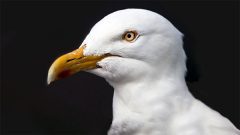
Herring Gull Photo

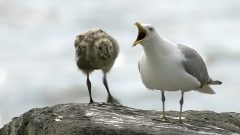
The Herring Gull is the quintessential basic "seagull," with no distinctive characters that immediately set it apart from other gull species. The characteristic gull of the North Atlantic, it can be found across much of North America.

Read Cornell Lab of Ornithology's blog, Round Robin

Appearance

Gulls
Gulls
Typical Voice

Adult Description

  • Medium to large gull.
  • Head and underparts white.
  • Back light gray.
  • Wingtips black with white spots.
  • Bill yellow with red spot near tip of lower mandible.

Immature Description

Juvenal plumage: Dark brown head and body, face and nape paler. Blackish around eye. Back and wings gray-brown with light edgings to feathers. Tail with large black band, whitish and barred at base. Flight feathers on wing blackish. Inner primaries pale with dark tips, forming pale window in spread wings. Bill black with pale base. Legs dark gray with pink overtones. Eyes dark brown.
First Winter (Basic I): Like juvenal, but head, throat, and breast whiter and back feathers with more complex pattern of bars. Bill black with base becoming paler. Eyes dark brown.
First Summer (Alternate I): Head, neck, and especially the throat whiter, but still streaked. Back showing a few light gray feathers. Wing feathers worn and paler. Bill black with pale base. Eyes dark brown.
Second Winter (Basic II): Head whiter, but neck heavily streaked. Back mottled brown and light gray. Underparts and rump mostly white, with variable amount of dark streaking. Wing tips black. Inner wings gray with variable amount of brown barring. Underwing whiter. Tail white at base with variable broad blackish subterminal band. Bill pale flesh at base, then black, with small white tip. Eyes pale straw or brown. Legs pale pinkish.
Second Summer (Alternate II): Head and neck largely white. Back may be entirely light gray with a few brown feathers. Underparts mostly white, with some streaking in throat. Bill yellowish at base, then black with white tip. Eyes pale straw or brown.
Third Winter (Basic III): Extensive dusky streaking on otherwise white head and neck, and especially around eye. Back light gray. Underparts white. Tail largely white with variable dark markings. Outer wing feathers (primaries) black with white tips, with white subterminal spots on some. Inner wing feathers with variable amount of brown markings. Underwing white with gray trailing edge and black tips to outer primaries. Bill yellowish with blackish bar or spots behind nostrils. Eyes yellow or buff.
Third Summer (Alternate III): Head and neck pure white or with only little streaking. Back all gray. Underparts white. Tail white with some dark smudging. Bill yellow with some red on lower mandible. Eyes brighter yellow. Legs brighter pink.

Range Map Help

Herring Gull Range Map
View dynamic map of eBird sightings

Field MarksHelp

Similar Species

  • Ring-billed Gull smaller, with yellow legs in adult and distinct black ring around bill and no red spot. Immature Ring-billed Gull with thinner black band on tail.
  • Thayer's Gull very similar, but adult has dark eyes and lacks most of the black under the wingtip.
  • California Gull is smaller, has yellowish green legs, and a black spot in front of the red spot on the bill.