

The Four Keys to ID
- Size & Shape
Largest of the North American herons with long legs, a sinuous neck, and thick, daggerlike bill. Head, chest, and wing plumes give a shaggy appearance. In flight, the Great Blue Heron curls its neck into a tight “S” shape; its wings are broad and rounded and its legs trail well beyond the tail.
Relative Size
Taller and much heavier than a Great Egret; smaller and much less bulky than a Sandhill Crane.
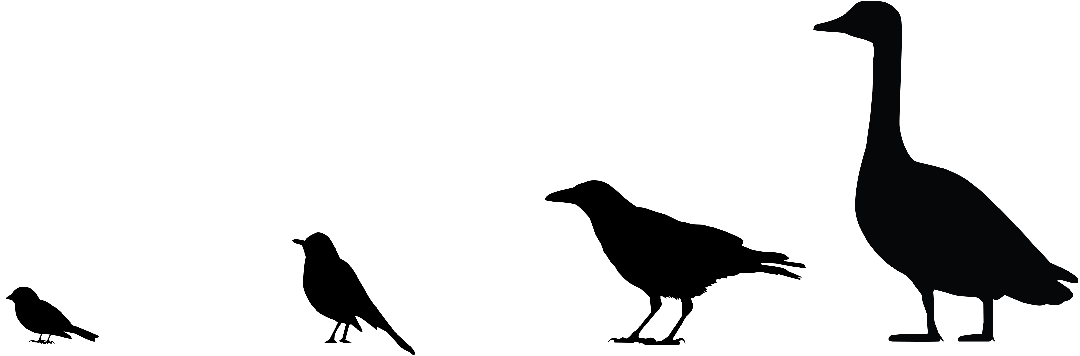
 goose-sized or larger
Measurements
- Both Sexes
- Length: 38.2-53.9 in (97-137 cm)
- Weight: 74.1-88.2 oz (2100-2500 g)
- Wingspan: 65.8-79.1 in (167-201 cm)
© Michael Todd / Macaulay Library
- Color Pattern
- Behavior
- Habitat
Regional Differences
An all-white subspecies, the Great White Heron, is found in coastal areas of southern Florida, along with individuals that are intermediate in plumage (showing a grayish body with a mostly white head and neck), known as “Würdemann’s Heron.”


