

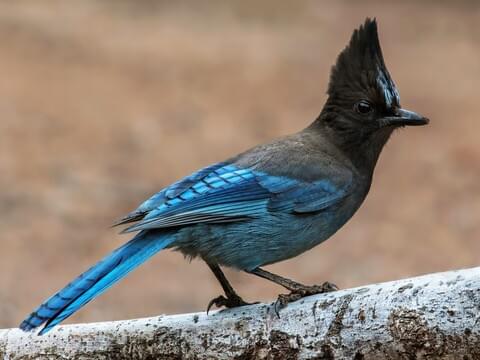
Measurements
Both Sexes
- Length
- 11–11.8 in
28–30 cm - Wingspan
- 15.4 in
39 cm - Weight
- 2.5–3.5 oz
70–100 g
Relative Size
- Very slightly smaller than Steller’s Jay; two-thirds size of a crow
Other Names
- California Jay (English)
- Geai buissonier (French)
- Urraca azuleja, Chara azuleja, Chara pecho rayando (Spanish)
Cool Facts
- The Western Scrub-Jay’s calls are a hallmark sound of the open West. Some 20 call types are known, and perhaps the best description comes from naturalist W. L. Dawson in 1923: “No masquerader at Mardi Gras has sprung such a cacophonic device upon a quiveringly expectant public. Dzweep, dzweep: it curdles the blood, as it is meant to do.”
- Western Scrub-Jays have a mischievous streak, and they’re not above outright theft. They’ve been caught stealing acorns from Acorn Woodpecker caches and robbing seeds and pine cones from Clark’s Nutcrackers. They even seem aware of their guilt: some scrub-jays steal acorns they’ve watched other jays hide. When these birds go to hide their own acorns, they check first that no other jays are watching.
- You might see Western Scrub-Jays standing on the back of a mule deer. They’re picking off and eating ticks and other parasites. The deer seem to appreciate the help, often standing still and holding up their ears to give the jays access.
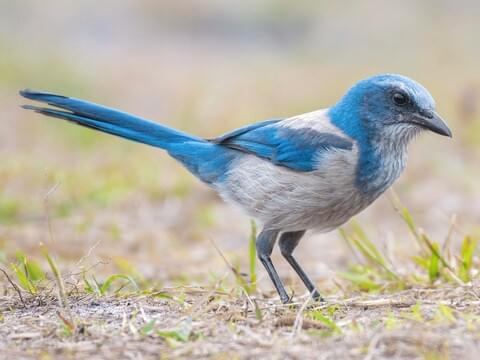
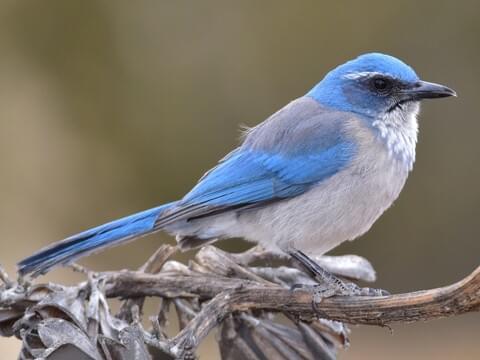
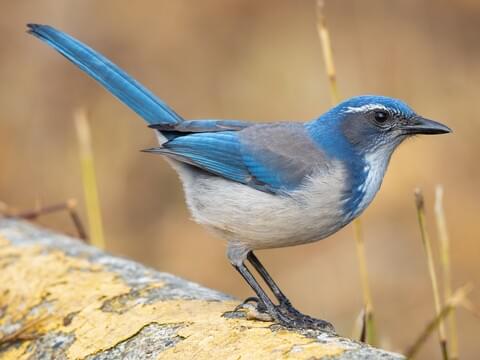
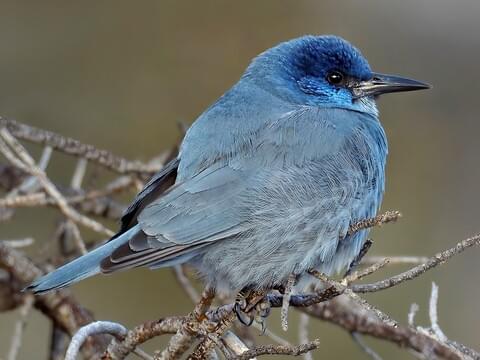
- Western Scrub-Jays evolved in two very different habitats: either coastal oak or montane pinyon pine woodlands. Populations that live around oaks developed stouter, more hooked beaks that help the birds hammer open acorns. Scrub-jays that live among pinyon pines have thinner, pointed beaks that are more adept at getting at the pine nuts hidden between pine cone scales.
- The oldest known Western Scrub-Jay was 15 years 9 months old.
Habitat

Scrub
Scrub, open woodlands, and suburban yards of the western United States (and Mexico). Along the Pacific seaboard, scrub-jays live near oaks: in oak scrub, oak woodlands, and the oak savannah of California’s Central Valley. They also live in the dense, shrub-choked chaparral and coastal sage that lines coastal hillsides. In the Great Basin, scrub-jays live mainly in pinyon pine and juniper woodlands.
Food

Omnivore
Western Scrub-Jays eat mostly insects and fruit during spring and summer, and switch to nuts and seeds during fall and winter. They eat small animals such as lizards and nestling birds, sometimes shadowing adult birds to find their nests. For plant material, scrub-jays eat acorns, pine nuts, juniper berries, and grass seeds; sunflower seeds and peanuts at feeders; as well as cultivated corn, almonds, walnuts, and cherries.
Nesting
Nesting Facts
- Clutch Size
- 1–5 eggs
- Number of Broods
- 1 broods
- Egg Length
- 0.9–1.3 in
2.4–3.4 cm - Egg Width
- 0.7–0.8 in
1.9–2 cm - Incubation Period
- 17–19 days
- Nestling Period
- 17–19 days
- Egg Description
- Pale green blotched with olive, or pale gray spotted with brown.
- Condition at Hatching
- Naked and helpless, eyes closed.
Nest Description
Scrub-jay nests are made of a basket of twigs lined with rootlets, fine strands of plant fibers, and livestock hair. Nests take about 10 days to build and are about 6 inches (15 centimeters) across when finished. Both members of a pair help with building.
Nest Placement

Tree
Typically fairly low (6-14 feet high) in an oak, pinyon pine, or other tree or shrub. Nests are often well hidden amid foliage, vines, and mistletoe.
Behavior

Ground Forager
Western Scrub-Jays are great to watch because they’re so animated. They move about in bold hops and lunges, looking around with sharp turns of the head. Often found in flocks during winter, these birds are vocal and playful. During the breeding season they staunchly defend territories from other scrub-jays by flying at them, calling, and occasionally pecking or grappling. Pairs stay together throughout the year.
Conservation

Least Concern
Common, populations may be increasing. The isolated subspecies found only in the Eagle Mountains of southeastern California is potentially vulnerable to disturbance, and is listed as a species of special concern in California.