
• Skip to Content
  • Skip to Main Navigation
  • Skip to Local Navigation
  • Skip to Search
  • Skip to Sitemap
  • Skip to Footer
Help develop a Bird ID tool!

Red-breasted Nuthatch

Sitta canadensis ORDER: PASSERIFORMES FAMILY: SITTIDAE

IUCN Conservation Status: Least Concern

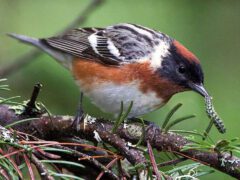
An intense bundle of energy at your feeder, Red-breasted Nuthatches are tiny, active birds of north woods and western mountains. These long-billed, short-tailed songbirds travel through tree canopies with chickadees, kinglets, and woodpeckers but stick to tree trunks and branches, where they search bark furrows for hidden insects. Their excitable yank-yank calls sound like tiny tin horns being honked in the treetops.

Attract this bird with the perfect feederSponsored Ad
Get BNA: the definitive resource for North American birds

Backyard Tips

Feeders are a great way to attract Red-breasted Nuthatches to your yard. They particularly like large seeds like sunflower and peanuts, as well as suet and peanut butter. Planting coniferous trees in your yard may provide shelter and foraging opportunities for Red-breasted Nuthatches in coming years.

Find This Bird

You can find Red-breasted Nuthatches by listening for their nasal, yammering call or for the sounds of a foraging flock of chickadees and other birds: nuthatches are often in attendance. Look along trunks and branches of trees for a bird wandering up, down, and sideways over the bark, and keep your eyes peeled for the Red-breasted Nuthatch’s bold black-and-white face pattern.

Get Involved

Keep track of the Red-breasted Nuthatches at your feeder with Project FeederWatch

Migratory patterns of Red-breasted Nuthatches and other birds revealed by eBird

Check out our resources on attracting cavity-nesting birds and setting up a nest box for small songbirds such as nuthatches. Then report any nesting activity to NestWatch

Help track the large-scale movements of Red-breasted Nuthatches by reporting your sightings to eBird

You Might Also Like

Red-breasted Nuthatch from Bent's Life Histories of North American Birds (1948)

Get BNA: the definitive resource for North American birds