

Building Skills: The 4 Keys to Bird Identification
To identify an unfamiliar bird, focus first on four keys to identification.
Blue Grosbeak by Blue Grosbeak by Todd Fellenbaum/Macaulay Library April 20, 2009
With more than 800 species of birds in the U.S. and Canada, it’s easy for a beginning bird watcher to feel overwhelmed by possibilities. Field guides seem crammed with similar-looking birds arranged in seemingly haphazard order. We can help you figure out where to begin.
First off: where not to start. Many ID tips focus on very specific details of plumage called field marks—the eyering of a Ruby-crowned Kinglet; the double breast band of a Killdeer. While these tips are useful, they assume you’ve already narrowed down your search to just a few similar species.
So start by learning to quickly recognize what group a mystery bird belongs to. You do this in two ways: by becoming familiar with the general shape, color, and behavior of birds, and by keeping a running tally in your head of what kinds of birds are most likely to be seen in your location and time of year.
Of course you’ll need to look at field marks—a wingbar here, an eyering there—to clinch some IDs. But these four keys will quickly get you to the right group of species, so you’ll know exactly which field marks to look for.
Put the 4 keys into practice
Bird watchers can identify many species from just a quick look. They’re using the four keys to visual identification: Size & Shape, Color Pattern, Behavior, and Habitat. Practice with these common birds to see how the 4 keys work together:
You can also see the 4 keys in action in our free Inside Birding series of instructional videos.
Black-capped Chickadee
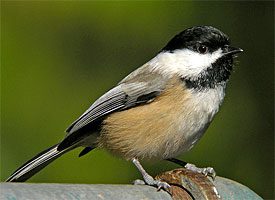
Size & Shape: Tiny bird with large head, plump body, narrow tail, and short bill
Color Pattern: Shiny black cap and throat against white cheeks. Buffy sides; wings and back soft gray
Behavior: Busy, acrobatic, and often in feeding flocks of several species
Habitat: Forests, woodlots, backyards, and shrubby areas; in the West, associated with deciduous trees
Cedar Waxwing
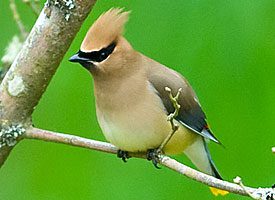
Size & Shape: A sleek songbird with a swept-back crest, plump body and square-tipped tail
Color Pattern: Silky gray-brown, with yellow belly and red and yellow accents on wings and tail
Behavior: Often in large flocks, eating berries or catching insects over open water, giving high trilling call
Habitat: Woodlands, orchards, parks, and treed suburbs
Killdeer
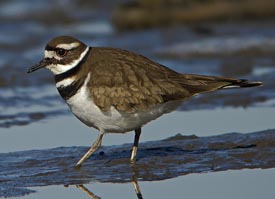
Size & Shape: A large plover with large bill, large eye, and round head; long legs
Color Pattern: Golden brown above with two dark bands across the white breast
Behavior: Runs swiftly along ground or breaks into stiff-winged flight with shrill kill-deer call
Habitat: Open grassy and rocky areas, often far from water, including parking lots, lawns, and driveways
Chipping Sparrow
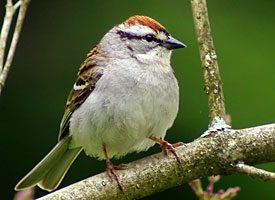
Size & Shape: A small, compact, fairly flat-headed sparrow with a long, notched tail
Color Pattern: Crisp, frosty gray-white below, striking rufous cap with black line through eye
Behavior: Often in flocks; feeds on open ground, sings from high in trees, often evergreens
Habitat: Open woodlands, forests with grassy clearings, parks, roadsides, yards

All About Birds
is a free resource
Available for everyone,
funded by donors like you
American Kestrel by Blair Dudeck / Macaulay Library